

 By
By 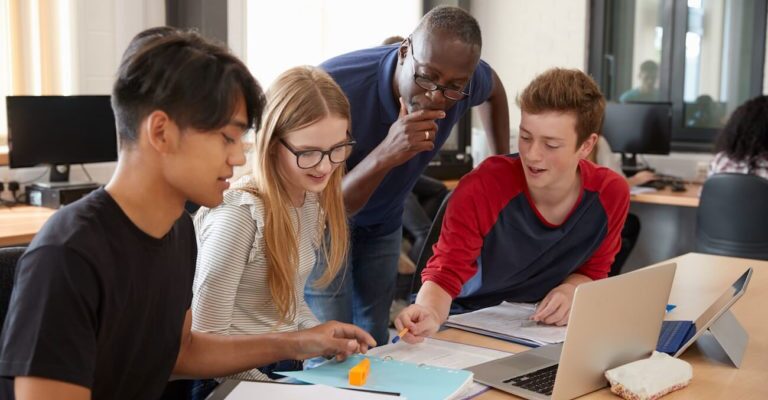
The traditional landscape of education was built for a different era. For generations, the standard classroom operated on a factory model, where an instructor stood at the front of the room delivering uniform lectures to rows of passive students. This teacher-centered approach prioritized memorization, standardized testing, and compliance. While it served the industrial economy of the past, it increasingly fails to meet the needs of modern learners and the fast-evolving workforce.
Defining the Student-Centered Framework
To appreciate its growing urgency, one must first understand what student-centered learning looks like in practice. In a traditional classroom, the teacher acts as the primary source of knowledge, controlling the pace, content, and delivery of the lesson. The students listen, take notes, and complete identical assignments.
In contrast, a student-centered classroom redefines the role of the instructor from the sole authority figure to a facilitator and guide. This educational model emphasizes voice, choice, and active engagement.
-
Voice and Agency: Students have input into how they learn and are encouraged to express their ideas, opinions, and perspectives during the learning process.
-
Differentiated Pacing: Recognizing that individuals absorb information at different speeds, learning plans often allow students to progress as they master concepts rather than forcing them to move forward according to a rigid calendar.
-
Collaborative Structures: Rather than working in isolation to compete for grades, students frequently collaborate on projects, simulating real-world work environments.
-
Authentic Assessment: Progress is measured through portfolios, demonstrations, and real-world applications of knowledge, rather than relying exclusively on multiple-choice examinations.
The Workforce Demands Adaptive Skills
The primary driver behind the institutional shift toward student-centered learning is the radical transformation of the global economy. Automation, artificial intelligence, and rapid technological breakthroughs have rendered simple data memorization obsolete. Computers can store and retrieve facts instantly; therefore, humans no longer need to spend years merely practicing rote recall.
The modern workplace demands what economists call durable skills or soft skills. These include critical thinking, complex problem-solving, emotional intelligence, and adaptability. When students spend their formative years passively receiving information, they fail to develop these crucial cognitive muscles.
Student-centered environments naturally cultivate these competencies. When a teacher tasks a group of students with resolving an open-ended problem, the learners must negotiate duties, manage their time, analyze data critically, and iterate on their failures. They learn how to learn. Because the job market now requires continuous upskilling throughout a career, cultivating autonomous, lifelong learning habits in school is the best way to ensure long-term career stability.
Technology Enables Scale and Personalization
In the past, critics of student-centered learning argued that personalizing education for dozens of students simultaneously was logistically impossible for a single teacher. While that critique may have held merit decades ago, modern technology has eliminated this barrier.
Digital tools, learning management software, and adaptive educational platforms now allow educators to track individual student progress in real-time. A teacher can quickly see which students have mastered a mathematical concept and which need target intervention. Technology frees educators from the burden of delivering the exact same lecture to thirty people at once, allowing them to spend their time conducting small-group workshops, offering detailed feedback, and mentoring students individually.
Furthermore, the internet has democratized access to information. Students are no longer dependent on a single textbook or a single teacher to learn about historical events, scientific principles, or literature. Because information is ubiquitous, the primary challenge for modern students is not finding information, but rather learning how to evaluate its credibility, synthesize diverse viewpoints, and apply it meaningfully. Student-centered learning focuses precisely on these high-level cognitive tasks.
Aligning Education with Cognitive Science
Over the last few decades, neuroscientists and educational psychologists have gathered overwhelming evidence regarding how the human brain processes, stores, and retrieves information. The consensus is clear: passive listening is one of the least effective methods for achieving long-term retention and deep conceptual understanding.
The human brain thrives on active construction. True comprehension occurs when a learner connects new information to existing mental frameworks, tests hypotheses, experiences cognitive dissonance, and resolves problems. This process is known as constructivism.
When students are allowed to select topics that genuinely interest them or apply academic concepts to real-world problems in their local communities, their intrinsic motivation skyrockets. Neurologically, high intrinsic motivation releases dopamine, a neurotransmitter that enhances focus, memory consolidation, and cognitive flexibility. By shifting the focus from passive listening to active doing, student-centered learning aligns school practices with the natural learning mechanisms of the human brain.
Fostering Equity and Inclusivity
Every student brings a unique background, set of cultural experiences, and baseline skill level into the classroom. A rigid, teacher-centered curriculum assumes a mythical average student, which inevitably alienates those who fall outside that narrow definition. Students who struggle are frequently left behind, while those who excel become bored and disengaged.
Student-centered learning inherently promotes equity by meeting students exactly where they are. Because it values individual identity and autonomy, it allows students from diverse backgrounds to bring their own cultural contexts and interests into their academic projects.
For instance, rather than reading a single mandatory book, a student-centered approach might allow students to choose from a curated list of literature that explores similar themes from different cultural perspectives. When students see their identities reflected in their coursework and realize that their personal interests matter to their instructors, their sense of belonging increases, leading to lower dropout rates and higher academic performance across historically marginalized groups.
The Path Forward for Modern Education
Transitioning to a student-centered model is not without its difficulties. It requires a complete reimagining of teacher training programs, classroom architectures, and institutional policies. School districts must move away from evaluating success purely through the lens of high-stakes standardized tests and instead adopt holistic evaluation methods.
Despite these logistical hurdles, the momentum behind this educational evolution is unstoppable. As the world grows more interconnected and complex, the definition of a well-educated citizen continues to shift. Education can no longer be about crossing a finish line or earning a diploma through compliance. It must be about equipping human beings with the curiosity, resilience, and intellectual autonomy required to navigate an unpredictable future. By placing students at the wheel of their own educational journeys, student-centered learning ensures that our educational institutions remain relevant, effective, and profoundly human.
Frequently Asked Questions
How do teachers maintain discipline in a student-centered classroom?
Discipline in a student-centered environment relies on mutual respect, clear community norms, and engagement rather than strict compliance and fear of punishment. When students are actively invested in their projects and have autonomy over their work, behavioral issues decline significantly because boredom is minimized. Teachers manage behavior by establishing clear expectations during group work, acting as facilitators, and helping students develop self-regulation and collaborative problem-solving skills.
Does this approach mean students can just do whatever they want all day?
No. Student-centered learning is highly structured, intentional, and rigorously planned. While students have choices regarding their topics, pacing, or presentation methods, those choices exist within a strict framework designed by the teacher to meet specific academic standards. The educator defines the learning objectives and rubrics, while the students determine the pathway they take to reach those specific goals.
How does student-centered learning affect high-achieving or gifted students?
Gifted students benefit immensely from this model because it removes the artificial ceiling imposed by a traditional, one-size-fits-all curriculum. Instead of waiting for the rest of the class to catch up, high-achieving students can move at an accelerated pace, dive deeper into complex facets of a subject, or tackle advanced, open-ended research projects that challenge their intellectual capabilities.
Is this methodology effective for students with learning disabilities?
Yes, it is often more effective than traditional lecturing. Because student-centered learning embraces differentiation, accommodation, and varied pacing, it allows students with special educational needs to utilize assistive technologies, access information through multiple modalities, and receive targeted, small-group instruction from the teacher without feeling isolated or singled out from their peers.
How do universities and employers view students coming from this background?
Universities and employers look very favorably upon students raised in student-centered systems. They actively seek individuals who demonstrate self-direction, collaboration, communication skills, and the ability to solve ambiguous problems without a step-by-step manual. Admissions officers and hiring managers value candidates who possess strong portfolios of work and can articulate their personal learning processes.
Can student-centered learning work in highly technical fields like physics or advanced mathematics?
Absolutely. In technical subjects, student-centered learning often manifests as inquiry-based or problem-based learning. Instead of memorizing formulas from a whiteboard, students might observe a physical phenomenon or a data anomaly and work backward to discover the underlying mathematical or physical laws. This ensures they understand the core logic of the science rather than just memorizing a calculation method.








Comments